


In damp, cold environments, can protective clothing maintain a certain level of warmth without rapid heat loss?
Release Time : 2025-12-02
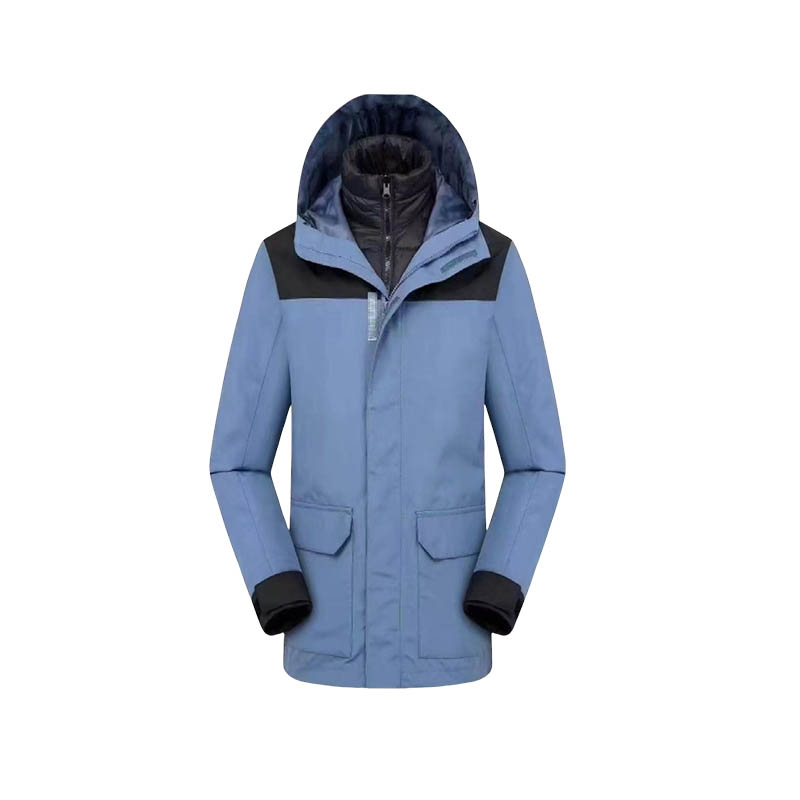
In damp, cold environments, warmth is not only a matter of comfort but also of safety and health. Cold air mixed with moisture penetrates clothing, quickly drawing heat away from the body, causing a chilling feeling and even increasing the risk of hypothermia. For a protective garment using a 300g fleece lining and a coated outer fabric, its ability to maintain effective warmth in damp, low-temperature conditions hinges on the synergistic effect of its material combination, structural design, and moisture management capabilities.
Firstly, the fleece lining, as the core of warmth, has the advantage of a unique fiber structure. It consists of numerous loose, crimped synthetic fibers, forming countless tiny air pockets. These still air pockets are natural thermal insulators, effectively preventing heat loss. Even in high humidity conditions, high-quality fleece retains a significant amount of loft, unlike cotton which absorbs water, clumps, and collapses, completely losing its insulating properties. More importantly, fleece itself is hydrophobic, making it difficult to absorb liquid water. Even if the surface gets wet, the moisture mostly remains between the fibers rather than being absorbed, thus preserving the internal dry space and insulation properties.
Secondly, the coated outer fabric acts as the "first line of defense" in wet and cold protection. It typically has water-repellent or lightly waterproof properties, effectively preventing rain, snow, or splashes from directly penetrating the inner layer. This barrier not only protects the fleece lining from drying out but also prevents cold winds from penetrating the garment and carrying away heat. Some high-performance coatings also have windproof properties, further reducing convective heat loss—one of the main ways heat is lost in wet and cold environments. When cold winds cannot penetrate the outer layer, the warm air trapped in the lining is retained, creating a stable microclimate.
However, simply "water-blocking" is not enough. The human body naturally sweats during activity. If moisture cannot escape, it will accumulate inside the clothing, also leading to a feeling of being wet and cold. Therefore, excellent protective clothing needs to strike a balance between preventing external moisture and wicking away internal moisture. While coated fabrics have limited breathability, a well-designed cut, breathable zippers under the armpits or back, and the inherent moisture-wicking properties of fleece can promote moisture dissipation to some extent. Although fleece doesn't absorb water, it uses capillary action to guide sweat to the outer layer, where it is then carried away by subtle airflow, thus slowing down the accumulation of moisture in the inner layer.
Furthermore, seam treatment also affects overall moisture resistance. If pinholes are not sealed with heat-sealing, rainwater or moisture can seep in through the seams, directly contacting the lining. High-quality protective clothing typically uses heat-sealing at critical seams to ensure the integrity of the outer layer and avoid the "weakest link" effect.
Ultimately, in damp and cold environments, this protective clothing doesn't completely block moisture, but rather significantly slows down the process of hypothermia through a comprehensive strategy of "repelling external moisture, keeping the inner layer dry, and slowing heat loss." It cannot replace professional diving suits or extreme environment gear, but it provides reliable basic warmth in common rainy or snowy weather, high-humidity operations, or winter outdoor inspections. What the wearer feels is not a fleeting warmth, but a continuous and stable temperature protection—even when the cold wind carries moisture, the body's core can still maintain the necessary heat, allowing one to focus on the task at hand with peace of mind. This is precisely the most valuable aspect of practical protective clothing in harsh environments: understated yet consistently reliable.
Firstly, the fleece lining, as the core of warmth, has the advantage of a unique fiber structure. It consists of numerous loose, crimped synthetic fibers, forming countless tiny air pockets. These still air pockets are natural thermal insulators, effectively preventing heat loss. Even in high humidity conditions, high-quality fleece retains a significant amount of loft, unlike cotton which absorbs water, clumps, and collapses, completely losing its insulating properties. More importantly, fleece itself is hydrophobic, making it difficult to absorb liquid water. Even if the surface gets wet, the moisture mostly remains between the fibers rather than being absorbed, thus preserving the internal dry space and insulation properties.
Secondly, the coated outer fabric acts as the "first line of defense" in wet and cold protection. It typically has water-repellent or lightly waterproof properties, effectively preventing rain, snow, or splashes from directly penetrating the inner layer. This barrier not only protects the fleece lining from drying out but also prevents cold winds from penetrating the garment and carrying away heat. Some high-performance coatings also have windproof properties, further reducing convective heat loss—one of the main ways heat is lost in wet and cold environments. When cold winds cannot penetrate the outer layer, the warm air trapped in the lining is retained, creating a stable microclimate.
However, simply "water-blocking" is not enough. The human body naturally sweats during activity. If moisture cannot escape, it will accumulate inside the clothing, also leading to a feeling of being wet and cold. Therefore, excellent protective clothing needs to strike a balance between preventing external moisture and wicking away internal moisture. While coated fabrics have limited breathability, a well-designed cut, breathable zippers under the armpits or back, and the inherent moisture-wicking properties of fleece can promote moisture dissipation to some extent. Although fleece doesn't absorb water, it uses capillary action to guide sweat to the outer layer, where it is then carried away by subtle airflow, thus slowing down the accumulation of moisture in the inner layer.
Furthermore, seam treatment also affects overall moisture resistance. If pinholes are not sealed with heat-sealing, rainwater or moisture can seep in through the seams, directly contacting the lining. High-quality protective clothing typically uses heat-sealing at critical seams to ensure the integrity of the outer layer and avoid the "weakest link" effect.
Ultimately, in damp and cold environments, this protective clothing doesn't completely block moisture, but rather significantly slows down the process of hypothermia through a comprehensive strategy of "repelling external moisture, keeping the inner layer dry, and slowing heat loss." It cannot replace professional diving suits or extreme environment gear, but it provides reliable basic warmth in common rainy or snowy weather, high-humidity operations, or winter outdoor inspections. What the wearer feels is not a fleeting warmth, but a continuous and stable temperature protection—even when the cold wind carries moisture, the body's core can still maintain the necessary heat, allowing one to focus on the task at hand with peace of mind. This is precisely the most valuable aspect of practical protective clothing in harsh environments: understated yet consistently reliable.